

Open Journal of Clinical and
Medical Images
Case Report - Open Access, Volume 5
Sandwich technique combining fractional laser and HDL hyaluronic acid: A multilayer skin rejuvenation protocol
Matteo Basso1,2*; Emanuela Di Lella2; Antonio Guida2
1Mediface International School of Aesthetic Medicine, Rome, Italy.
2International Master in Aesthetic Medicine at Unicamillus, Rome, Italy.
*Corresponding Author: Matteo Basso
Mediface International School of Aesthetic Medicine, Rome, Italy.
Email: mat.bas72@gmail.com
Received : Oct 21, 2025
Accepted : Nov 10, 2025
Published : Nov 17, 2025
Archived : www.jclinmedimages.org
Copyright : © Basso M (2025).
Abstract
Background: Facial hyperpigmentation in mature skin is often compounded by dermal thinning, dehydration, and inflammation, making it resistant to monotherapies. Combining fractional lasers with non-crosslinked Hyaluronic Acid (HA) may offer synergistic benefits through biostimulation, pigment modulation, and structural remodeling.
Case: A 58-year-old woman (Fitzpatrick II, Glogau III) presented with uneven tone, lentigines, and skin dullness. She underwent a three-session protocol combining Hydro Deluxe (non-crosslinked HA + 0.01% CaHA) with 1470 nm fractional diode laser (LaserMe). Treatment included HA injection via cannula pre-laser, followed by micro-papular HA delivery post-laser (“sandwich” technique), and post-care with an Instant Recovery Mask. A 30-day preconditioning phase using Melan Ox serum and SPF 50+ was implemented.
Results: Biometric analysis showed a +30% increase in hydration, ~20% reduction in pigmentation, +25% dermal thickening, and +70% increase in dermal density. The patient reported smoother texture, improved tone, and enhanced radiance, with no adverse effects or downtime.
Conclusion: This case supports the safe and effective use of a multimodal protocol combining injectable skin boosters and non-ablative laser for treating pigmentation and age-related skin changes. The layered “sandwich” strategy may enhance treatment outcomes with minimal downtime.
Keywords: Hyperpigmentation; Fractional laser; Non-cross linked hyaluronic acid; Hydro deluxe; LaserMe 1470 nm; Photodamage; Skin hydration; Skin aging; Sandwich technique.
Citation: Basso M, Lella ED, Guida A. Sandwich technique combining fractional laser and HDL hyaluronic acid: A multilayer skin rejuvenation protocol. Open J Clin Med Images. 2025; 5(2): 1211.
Introduction
Facial hyperpigmentation remains one of the most common and psychologically distressing dermatologic concerns, particularly among women in middle age. It encompasses a spectrum of pigmentary disorders such as melasma, solar lentigines, and Post-Inflammatory Hyperpigmentation (PIH), which often coexist with clinical signs of photoaging, including laxity, fine lines, and textural irregularities [1,2]. The etiology of these pigmentary conditions is complex and multifactorial, involving an interplay of genetic predisposition, hormonal influences, Ultraviolet (UV) exposure, inflammation, and oxidative stress [3,4]. These triggers not only upregulate melanogenesis but also impair the skin’s Extracellular Matrix (ECM), contributing to dermal thinning, dehydration, and loss of structural integrity [5,6].
Standard treatment strategies for pigmentation have traditionally relied on monotherapies such as chemical peels, topical depigmenting agents (e.g., hydroquinone, retinoids, azelaic acid), or energy-based devices including ablative or non-ablative lasers [7-10]. However, these interventions often target only a single layer of skin pathology focusing on melanocyte regulation, while neglecting underlying dermal inflammation, impaired hydration, or collagen loss that may perpetuate pigment retention and uneven tone. Furthermore, monotherapies frequently fall short in treating mixed-type or recalcitrant hyperpigmentation, particularly in mature skin where inflammation and ECM degradation exacerbate dyschromia.
To address these limitations, modern aesthetic dermatology increasingly favors multimodal strategies that integrate both epidermal and dermal interventions [11]. In this context, skin boosters, specifically injectable formulations of non-crosslinked Hyaluronic Acid (HA) have gained prominence for their ability to restore hydration, improve dermal elasticity, and promote fibroblast activity without altering facial volume [12]. Unlike crosslinked fillers used primarily for volumization, non-crosslinked HA, especially when enriched with biomimetic peptides or biostimulatory agents such as Calcium Hydroxyapatite (CaHA), functions more as a regenerative matrix. It not only supports keratinocyte migration and wound healing but also plays a crucial role in ECM remodeling, enhancing the skin’s resilience and tone [13].
In parallel, non-ablative fractional lasers, such as the 1470 nm diode (LaserMe), offer a safe and effective modality for inducing neocollagenesis, reducing dermal inflammation, and improving pigmentary irregularities through controlled thermal injury [14]. The 1470 nm wavelength penetrates into the mid-dermis, bypassing the epidermis, which minimizes downtime and mitigates the risk of post-inflammatory pigment changes, especially important in patients with higher Fitzpatrick phototypes [15].
Emerging evidence supports the synergistic use of no crosslinked HA injectables with fractional lasers, leveraging the complementary mechanisms of hydration, structural support, and inflammatory modulation. These combination protocols may yield superior outcomes in terms of skin brightness, elasticity, and evenness of tone compared to monotherapy [16,17].
In this case report, we present a clinical outcome of a 58-year-old woman with photoinduced pigmentary changes and signs of dermal aging, treated using a combined protocol of Hydro Deluxe (non-crosslinked HA + 0.01% CaHA) and LaserMe 1470 nm fractional diode laser, followed by topical post-care. This integrative strategy targets hydration, pigmentation, and collagen remodeling in a single protocol, offering a novel solution for complex aging and pigmentary skin phenotypes.
Case presentations
A 58-year-old woman presented to our clinic with primary concerns of dull, uneven skin tone and progressive facial photodamage. Her complaints included persistent hyperpigmentation, loss of radiance, and subtle sagging features that had become more pronounced over the preceding five years. She denied any previous aesthetic procedures and had no history of systemic illnesses, hormonal treatments, or dermatological conditions. Her skin type was Fitzpatrick III, and clinical examination revealed Glogau grade III photoaging, with signs of superficial rhytides, diffuse lentiginous hyperpigmentation, early elastosis, and moderate dermal dehydration.
Motivated by her desire for a more even complexion and improved skin texture without resorting to invasive procedures, a tailored protocol was proposed targeting both epidermal pigmentation and dermal degeneration. To enhance treatment response and reduce the risk of post-inflammatory hyperpigmentation, the patient was started on a 30-day preconditioning regimen consisting of Melan Ox serum, applied twice daily, and broad-spectrum SPF 50+ photoprotection each morning. This preparatory phase was designed to stabilize melanocyte activity, attenuate underlying inflammation, and optimize the skin barrier prior to deviceand injection-based intervention.
The core treatment consisted of a three-session protocol, spaced 30 days apart, combining injectable biostimulation and fractional non-ablative laser therapy. Each session included the following steps:
1. Hydro Deluxe (Neauvia) was administered using a cannula technique, delivering the non-crosslinked HA filler enriched with CaHA into the mid-to-deep dermis. The aim was to restore hydration, support ECM integrity, and initiate collagen stimulation without volumizing effects.
2. The LaserMe 1470 nm fractional diode laser was then applied in two sequential passes:
□ A full-face pass at 25 mJ fluence (spacing 1.6) was used to activate generalized dermal remodeling and stimulate neocollagenesis.
□ A targeted high-energy pass at 40 mJ fluence (spacing 1.3) was performed on hyperpigmented zones to provide localized thermal disruption of pigment clusters and accelerate turnover.
3. Immediately following the laser application, Hydro Deluxe was re-administered using a micro-papular technique over the treated skin. This “sandwich” approach, positioning HAbased skin booster both preand post-laser, was intended to mitigate inflammatory responses, enhance hydration, and maximize regenerative signaling pathways initiated by the laser.
4. To complete each session, a professional Instant Recovery Mask was applied to support epidermal repair, reduce erythema, and improve post-procedural comfort.
5. The patient tolerated all sessions well with no adverse effects or complications. Mild erythema and warmth were noted for up to 24 hours post-treatment but resolved spontaneously without intervention.
Results
The combination of Neauvia Hydro Deluxe, LaserMe 1470 nm, and targeted cosmeceutical aftercare delivered clear, measurable improvements in overall skin quality with minimal downtime.
Hydration levels increased by +30%, as confirmed through biometric skin analysis. Clinically, the skin appeared more supple and elastic, with improved turgor indicators of effective deep dermal hydration. Pigmentation improved significantly, with a ~20% reduction in discoloration and mottling, particularly in the periorbital and malar regions. Inflammatory markers, assessed via the SANDWICH protocol, also decreased, contributing to a more even and calm skin tone.
Dermal remodeling showed strong results: non-invasive imaging revealed a +25% increase in dermal thickness and a +70% gain in dermal density. These metrics suggest robust collagen production and extracellular matrix regeneration, consistent with the known biostimulatory effects of HA fillers and fractional laser therapy. Visibly, the skin appeared firmer, smoother, and more radiant. Patients reported a restored “healthy glow” and improved skin comfort, texture, and self-confidence (Figure 1).
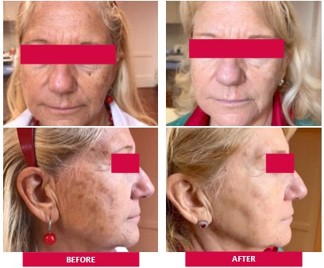
This synergistic protocol leveraging injectables, energy-based devices, and tailored skincare achieved comprehensive, multi-dimensional improvement in skin health and aesthetics. The patient expressed high satisfaction and indicated a strong interest in repeating the treatment annually as part of long-term skin maintenance.
Discussion
This case reinforces the evolving paradigm in aesthetic dermatology that addresses pigmentary and structural skin concerns through a multimodal, layered therapeutic strategy. Traditional monotherapies for hyperpigmentation, such as chemical peels, topical tyrosinase inhibitors, or isolated laser treatments, often yield suboptimal outcomes, particularly in cases complicated by age-related dermal thinning, photoaging, or persistent inflammation [2,18]. Pigmentary disorders are rarely confined to the epidermis alone; instead, they are deeply intertwined with chronic low-grade inflammation, altered melanocyte activity, disrupted epidermal turnover, and dermal Extracellular Matrix (ECM) degeneration [3].
Non-ablative fractional photothermolysis, such as that produced by the 1470 nm diode laser (LaserMe), provides a mechanism to target both epidermal melanin and dermal remodeling through selective thermal injury. It stimulates controlled neocollagenesis, ECM reorganization, and pigment dispersion, all while sparing the epidermis. This minimizes downtime and risk of post-inflammatory hyperpigmentation, particularly in patients with lighter phototypes [14]. When combined with immediate post-laser application of non-crosslinked hyaluronic acid fillers enriched with Calcium Hydroxyapatite (CaHA), as seen in Hydro Deluxe, the approach not only enhances hydration but also leverages a biostimulatory response that promotes collagen types I and III synthesis, fibroblast activation, and angiogenesis [13,19].
The presented “SANDWICH” technique targets multiple skin layers by combining Hydro Deluxe injection for deep hydration and collagen priming with fractional laser stimulation acting on a different dermal plane. This concept parallels the multilayer biorevitalization approach described by Cavallini et al., who used non-crosslinked HA alone at various skin depths. By integrating distinct yet complementary modalities, our protocol extends this concept toward a more comprehensive, synergistic regeneration strategy [11]. In this case, the combined laser–Hydro Deluxe protocol resulted in a +70% increase in dermal density, a +30% rise in hydration, and an approximately 20% reduction in pigmentation. Its efficacy likely derives from the synergistic interaction between mechanical dermal stimulation, controlled photothermal injury, and targeted delivery of bioactive hyaluronic acid within an optimally receptive tissue environment.
Importantly, this protocol incorporated a 30-day preconditioning phase with Melan Ox serum, a formulation containing tranexamic acid, niacinamide, and brightening peptides known to modulate melanogenesis and reduce inflammation. This preparatory step likely enhanced epidermal barrier function and minimized post-procedural hyperreactivity of melanocytes. Such preconditioning aligns with contemporary approaches to pigmentation management, where melanin modulation, inflammation control, and barrier optimization are addressed simultaneously through cosmeceuticals, device-based dermal remodeling, and injectable biostimulation [9,20,21]. This layered, physiology-driven strategy reflects an evolution from pigment suppression alone toward comprehensive regulation of the pigmentary ecosystem.
A key benefit of this approach is its minimal invasiveness and excellent tolerability. Our patient experienced no adverse events, and erythema resolved quickly without signs of rebound pigmentation. Although she had Fitzpatrick type II skin, safety in higher phototypes is often a concern. Notably, Borges dos Santos et al. successfully used the LaserMe 1470 nm device in a phototype V patient, achieving effective outcomes across four sessions without pigmentary complications, highlighting the laser’s suitability even in melanin-rich skin when protocols are properly adapted [22].
Supporting evidence for the efficacy and safety of 1470 nm non-ablative fractional lasers comes from a pilot study by Kubik et al., which demonstrated significant improvement in skin texture and dermal remodeling in patients with striae distensae after three treatment sessions. While the indication differed, the underlying mechanisms deep thermal stimulation with minimal surface disruption align closely with our approach. The absence of adverse events and progressive structural gains in that study mirror the outcomes seen in our patient, reinforcing the laser’s versatility in treating both pigmentary and structural skin concerns [23].
Importantly, the regenerative benefits extend beyond pigment correction. Hyaluronic acid, especially in its non-crosslinked form, has been shown to exert biological effects beyond simple hydration. It influences keratinocyte migration, fibroblast proliferation, ECM homeostasis, and cytokine modulation. Zerbinati et al. demonstrated that HA enriched with CaHA increased VEGF expression and reduced pro-inflammatory cytokines like IL-8 in keratinocytes, suggesting both angiogenic and anti-inflammatory potential [13]. These properties are particularly valuable in the aging dermis, where vascular decline and chronic inflammation contribute to visible skin degradation.
While this case report is limited by its single-subject design and lack of long-term follow-up, the results add to a growing body of evidence supporting hybrid biostimulation protocols for aesthetic dermatology. Future studies should explore headto-head comparisons between different HA formulations (crosslinked vs non-crosslinked), various fractional lasers, and timing of injection relative to device application. Additionally, the role of adjunctive cosmeceutical regimens and the durability of results over 6-12 months merit further investigation.
Ultimately, this case underscores the value of an integrated, biologically-informed approach to pigmentation disorders. Rather than treating melanin deposition in isolation, modern protocols should aim to restore overall skin homeostasis, hydration, structure, and barrier function through the intelligent combination of injectables, devices, and topical therapies. The SANDWICH method, in particular, represents a promising technique in this emerging framework, offering enhanced outcomes with minimal risk and high patient satisfaction.
Conclusion
This case demonstrates the safety and efficacy of a multimodal treatment approach combining the LaserMe 1470 nm fractional diode laser, Hydro Deluxe, and tailored cosmeceutical aftercare. The synergy between laser-induced remodeling and HA-driven hydration and biostimulation produced measurable improvements in hydration, pigmentation, dermal thickness, and overall skin quality, with high patient satisfaction and minimal downtime.
This protocol offers a clinically advanced, non-invasive alternative for patients seeking comprehensive skin rejuvenation without resorting to surgical options. Continued research, including controlled clinical trials, is recommended to assess longterm outcomes and support broader adoption across diverse patient profiles and skin types.
Declarations
Conflict of interest statement: The authors declare that there are no conflicts of interest regarding the publication of this paper.
References
- Lawrence E, Syed HA, Al Aboud KM. Postinflammatory hyperpigmentation. In: StatPearls. StatPearls Publishing. 2025.
- Desai SR. Hyperpigmentation therapy: a review. J Clin Aesthet Dermatol. 2014; 7: 13–17.
- Bastonini E, Kovacs D, Picardo M. Skin pigmentation and pigmentary disorders: focus on epidermal/dermal cross-talk. Ann Dermatol. 2016; 28: 279–289.
- Liu W, Chen Q, Xia Y. New mechanistic insights of melasma. Clin Cosmet Investig Dermatol. 2023; 16: 429–442.
- Papaccio F, D’Arino A, Caputo S, Bellei B. Focus on the contribution of oxidative stress in skin aging. Antioxidants. 2022; 11: 1121.
- Badylak SF, Freytes DO, Gilbert TW. Extracellular matrix as a biological scaffold material: structure and function. Acta Biomater. 2009; 5: 1–13.
- Sowash M, Alster T. Review of laser treatments for post-inflammatory hyperpigmentation in skin of color. Am J Clin Dermatol. 2023; 24: 381–396.
- Dayal S, Sahu P, Sangal B, Sharma S. Role of chemical peels in postinflammatory hyperpigmentation: a comprehensive review. Pigment Int. 2019; 6: 59.
- Boo YC. Mechanistic basis and clinical evidence for the applications of nicotinamide (niacinamide) to control skin aging and pigmentation. Antioxidants. 2021; 10: 1315.
- Plensdorf S. Pigmentation disorders: diagnosis and management.
- Cavallini M. Layered biorevitalization: the sandwich technique combined with Neauvia Hydro Deluxe for enhanced skin quality. J Appl Cosmetol. 2025; 43.
- Chahine S, Marozzi B, Valle A, Michellini L, Lazzari T. Efficacy and safety of non-cross-linked hyaluronic acid injections for facial skin biorevitalization: a single-center, open-label, single-arm, uncontrolled, post-marketing study. Cureus. 2025.
- Zerbinati N, Sommatis S, Maccario C, et al. In vitro evaluation of the effect of a not cross-linked hyaluronic acid hydrogel on human keratinocytes for mesotherapy. Gels. 2021; 7: 15.
- Kubik P, Gruszczyński W, Łukasik B. Assessment of safety and mechanisms of action of the 1470 nm LaserMe device. Gen Med. 2024; 8.
- Alexiades-Armenakas MR, Dover JS, Arndt KA. The spectrum of laser skin resurfacing: nonablative, fractional, and ablative laser resurfacing. J Am Acad Dermatol. 2008; 58: 719–737.
- Akerman L, Mimouni D, Nosrati A, Hilewitz D, Solomon-Cohen E. A combination of non-ablative laser and hyaluronic acid injectable for postacne scars: a novel treatment protocol. J Clin Aesthet Dermatol. 2022; 15: 53–56.
- Bocsa G. A comprehensive approach to skin rejuvenation with Neauvia smart combination therapy. J Aesthet Nurs. 2024; 13: 124–128.
- Zolghadri S, Beygi M, Mohammad TF, et al. Targeting tyrosinase in hyperpigmentation: current status, limitations and future promises. Biochem Pharmacol. 2023; 212: 115574.
- Aguilera SB, McCarthy A, Khalifian S, Lorenc ZP, Goldie K, Chernoff WG. The role of calcium hydroxylapatite (Radiesse) as a regenerative aesthetic treatment: a narrative review. Aesthet Surg J. 2023; 43: 1063–1090.
- Hakozaki T, Minwalla L, Zhuang J, et al. The effect of niacinamide on reducing cutaneous pigmentation and suppression of melanosome transfer. Br J Dermatol. 2002; 147: 20–31.
- Wang JV, Jordan V, et al. Tranexamic acid for melasma: evaluating the various formulations. J Clin Aesthet Dermatol. 2019.
- Borges dos Santos IF, Guidi RM, Bulhões VCS, Rabelo VA. Safety and effectiveness of use of 1470 nm non-ablative fractional laser in patients with phototype V: a case report. AOS. 2025; 6.
- Kubik P, Bighetti S, Bettolini L, et al. The effectiveness and safety of 1470 nm non-ablative laser therapy for the treatment of striae distensae: a pilot study. Cosmetics. 2025; 12: 148.